How to Beat a Super-Fit Player
I seem to have trouble beating players that rely on retrieving, and I don't think it's because I am not fit enough, I just make too many mistakes trying to win the rally. Any advice?
Where to Serve and Why
It could be that you do not have the power or variety in your serve that the pros do, knowing where to serve and why can add a weapon to your game. Too many players think of the serve as a way to start the point without realizing the consequences or options that are involved.
...click HERE to read on
Junior Squash - Some Friendly Advice From a parent to the Coach. Watch on YouTube
Had too much good food & fine wines over Christmas
Get back into shape for New Year?
You will be joining countless others with New Year resolutions to get fit, however, assuming that you were in reasonable shape going into the festive period it shouldn't take too long to lose the Christmas pud! No doubt you will be keen to get back on court, but try and also fit in a couple of aerobic sessions on the bike/treadmill just to get the fitness back up to speed. Ideally, look to work out at a level that levels you unable to chat (but able to breathe!) for approximately 30 minutes. If you are also able to find a squash friend willing to do some simple routines, this will also help rather than launching yourself straight back into a full on match! From Tim Garner's "Tim'll Fixit"
"Spiderman" The Worlds Greatest Stretch - Dynamic Warm-up
Watch this "Spiderman" warm-up and stretch on Youtube ...But don't overdo it says Coach Derek Thorpe
Do squash players change their grip like tennis players? In general the answer is no. Tennis players switch their grip in order to be able to maximise the top spin they can put on the ball on both sides. However, very experienced squash players do change their grip slightly to reach awkward shots. This is only used as a last resort when the ball cannot be retrieved with a normal swing. Beginners and less advanced players should stick firmly with the "chopper" style grip for backhand and forehand at all times. Otherwise they may not play a consistent stroke.
Tips for Team and Good Club Players For me to be competitive with these players I found I really had to be more consistent and patient. Everyone gets to almost all balls...READ ON
Concentration Read this witty but important piece by Veteran player from Luton.
How do I get fit and shed unwanted pounds? The secret is not to try and do all your training in one day to shed those excess pounds! Work out how many sessions you can do each week and then try and find a balance between getting back on the court and some cardio work. Ideally, a couple of sessions on the bike/treadmill (unless you are a hard soul and fancy the outdoors) plus a couple of court sessions should put you back on track. ref. Tim Garner
How do I cope with someone who 'blasts' me off the court? - I say play that person a few times and other hard-hitting players until you get used to the pace. You might also play tight lobs & drops, although you'll need to be fit. Tim Garner says "One of the keys is to not get sucked into playing their power game. If anything let them do all the hard work by giving them little pace to work with, and try to keep the ball as straight as possible as swinging a racket at a ball that is tight against the wall is both daunting and potentially expensive!"
Razik's Squash Quick Tips 2 (Footwork) Watch this video carefully. What does he do first on EVERY movement?
Sports Psychology - How to Win
Enjoy playing your "average squash" well.
You might beat me today but you’re never going to want to play me again! Click HERE for some excellent match play advice.
Return of Serve How often do you miss the volley? What are you trying to do with the return? A classic error with the return of serve is standing still and then trying to intercept a moving ball. Make sure you are ready to move before the opponent serves. When they serve, pick up the rhythm of the ball's movement and synchronize your own movement with it. Then you and the ball will be in the same time dimension and you will find it much easier to coordinate your volley. You are volleying everything you possibly can, aren't you? Your standard return should be a high, slow and straight from a good serve, played as you back away from the ball toward the centre of the court. Just like the 'change-up' serve, don't use short attacking returns too often, because even a slow opponent will get the message if you remind them too often. Keep those short attacking returns in reserve. You can try the high cross-court return relatively regularly. But remember the advice about cross-courts.
Cross Court Shot
What percentage of your cross-court shots are targeted wide enough to stop your opponent from volleying? Are you considering your opponent's position when you hit the cross-court? Are they forward or back in the court? Where are you? Are you trying to hit the ball toward the highest/widest point parallel with your opponent? Are you using a pace and height that allows you the opportunity to guarantee that you can be back in position before a possible intercept from your opponent? These are essential elements in cross-court design. You can use pace if the opponent is out of position. Otherwise, slow the ball down to give yourself time to position for the next phase of the rally and to force your opponent to take time before returning.
Drop Shot
Get your opponent behind you by driving good length shots. Once he is behind the short line or if he looks off balance, play attacking drop shots. The drop shot is played close to the tin with very little pace. If you are in the middle of the court then you can aim for the wall, then floor. As your touch improves you aim to hit the nick to make it even more difficult.
BBC Beginner's guide to squash Squash is a fast-moving game...
Rules, scoring, tactics, equipment, getting involved.
If you want to improve your game, there's nothing like having some lessons with a qualified coach. But to get you started here are some basic tips, to help you in the early days.
1. Use the corners of the court as much as possible and the side walls as it's difficult for your opponent to get a good return back the closer it is to the wall.
2. Never take your eye off the ball. This is for two reasons, one so you make sure you return properly and two for your health. The ball will be moving quickly and it can hurt!
3. Don't start the game too quickly. Normally courts are booked for 45 minutes and the last 15 minutes will feel like hours if you don't pace yourself.
4. Do as little running around as possible by positioning yourself in the centre of the court whenever you can. Make your opponent do all the chasing.
5. Vary your game by varying your shot selection. Use the lob and drop shots; you don't always have to hit the ball as hard as you can.
6. In between shots, where possible, try and make your way back to the ‘T’. This is the best possible position to be in preparation for your next shot.
7. Join a squash league; they are not as intimidating as they sound! If you continue to play the same opponent your game can become stale, a league will provide a variety of opponents to enhance your game.
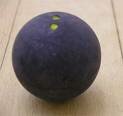
8. Remember to warm up. As squash is demanding from the outset, testing both your stamina and agility; it is important to make sure your body is prepared. This also applies to the ball; trying to play with a cold ball is almost impossible. Use a single spot yellow ball. At the end of a hard session warm down. Use similar stretches and gentle jogging to gradually reduce your racing heart-beat.
9. Wear eye protection. Getting hit anywhere is bad news, but in the eyes could be particularly damaging.
10. Take a few lessons to get off to a safe start with good guidance.
Bash and Dash - tip from Mike Way Trying to hit the ball too hard, too often, is very common in squash. At the entry level of the game the 100 mph shot down the middle often wins a rally. Thus was born the bash and dash mentality witnessed and cherished by your local pro. As they improve, most players with brains learn that accuracy is more important than power. However, over hitting, aiming too low on the front wall and sacrificing good length is still the norm. By not forcing our drives – try hitting at say 75–85% of maximum power – we will hit better length, conserve energy and help to prevent the 'rush factor'. Moving quickly and effectively, but without rushing, can be learned by anybody – but expert help from your local pro is a must for this ailment.
BBC Beginner's guide to squash
Squash is a fast-moving game that requires skill, speed and supreme fitness.
The ball can reach speeds of up to 170mph and players can burn off up to 1000 calories per hour of squash - higher than most other sports. It began in the 19th century and was originally called squash racquets, to distinguish it from the game of racquets.
Harrow School, just outside London, is credited as the game's birthplace - when young pupils who couldn't compete with older boys for space on the proper racquets courts invented their own version using a rubber ball instead of a hard one.